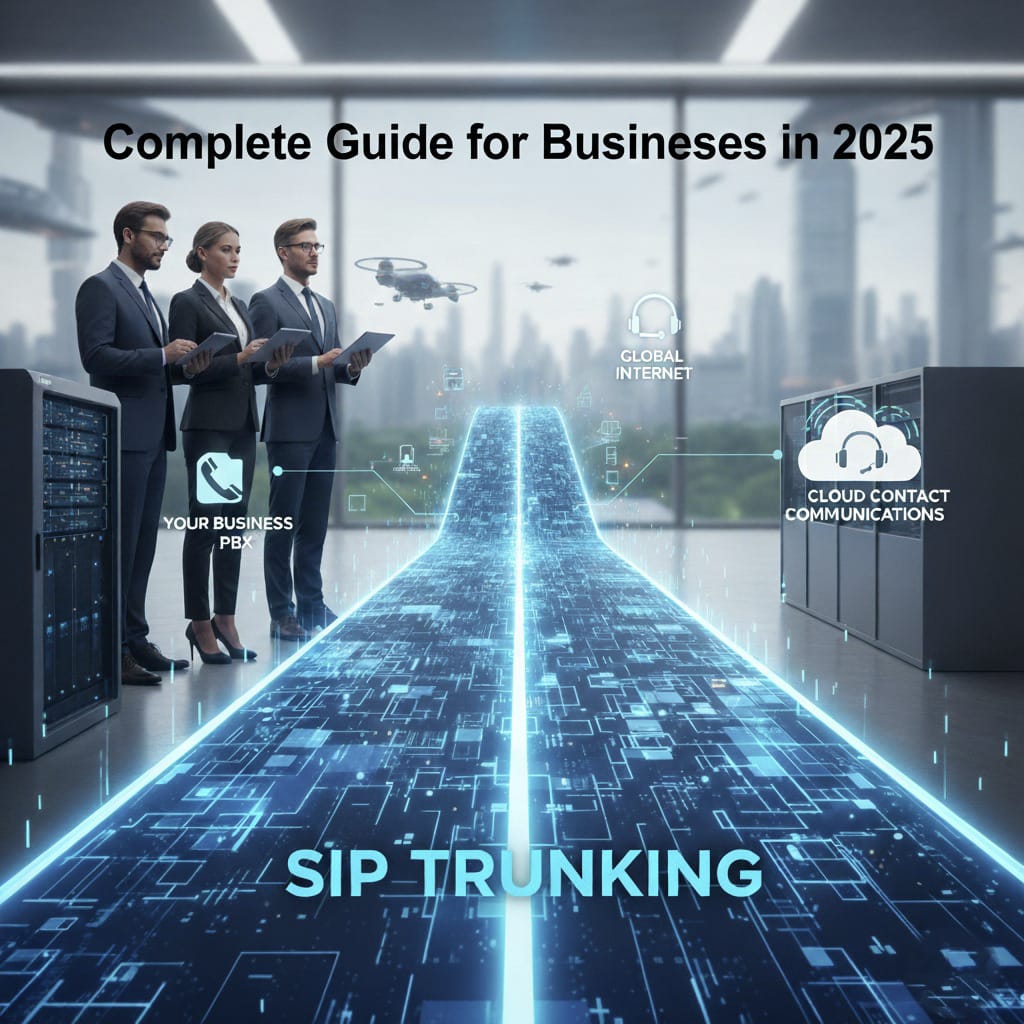
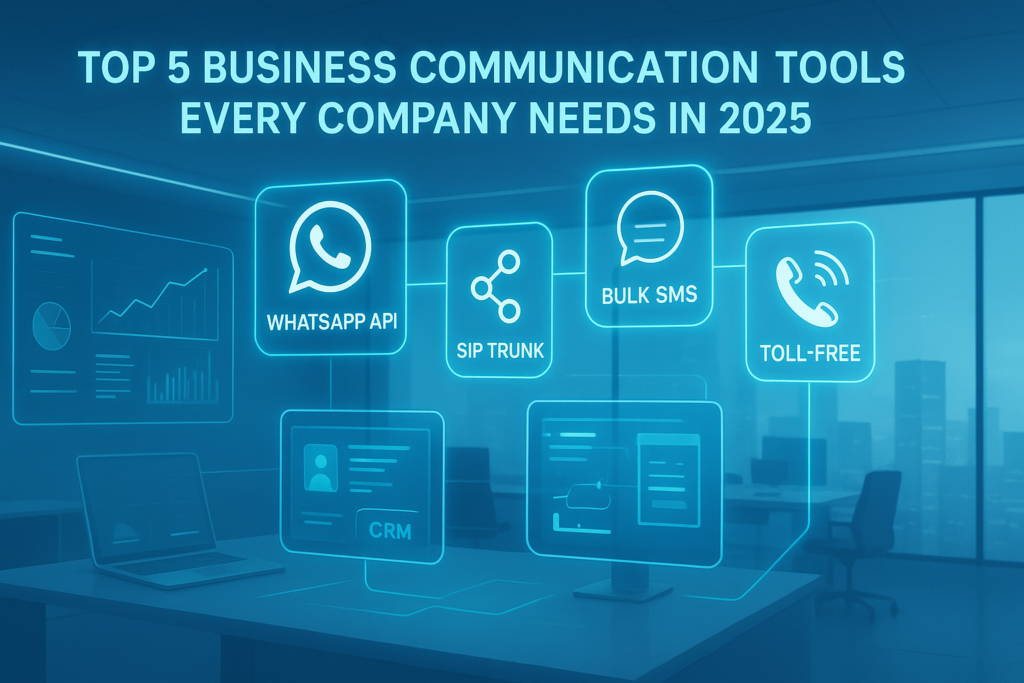
Top 5 Business Communication Tools Every Company Needs in 2025
In 2025, businesses are operating in a communication environment that is faster, more connected, and more automated than ever before. Whether you’re a startup, a mid-sized company, or a global enterprise, communication efficiency is key. It determines how well you acquire customers. It also impacts how you close deals and support users. Tools like IPPBX, WhatsApp API, SIP Trunking, Bulk SMS, and Toll-Free solutions are indispensable. They’ve become the backbone of modern communication infrastructure. Each tool plays a unique role in strengthening business relationships, optimizing workflows, and creating seamless communication across teams and customers.
What makes this era particularly interesting is the shift from traditional systems to cloud-driven, AI-enhanced communication models. The days of clunky hardware and slow manual processes are gone. Modern companies need tools that are flexible, scalable, and integrated with their CRM, automation platforms, and customer support systems. This article dives deep into the top 5 business communication tools every company should adopt in 2025. It explains how these tools help businesses grow smarter, faster, and more efficiently. If you’re aiming for stronger communication, you should use these tools. They create smoother workflows. They also enhance customer experience. These are the tools you cannot afford to ignore.
Why Modern Business Communication Tools Matter in 2025
In 2025, the speed at which a business communicates often determines how quickly it grows. Customers expect instant replies, faster resolutions, and smooth interactions across multiple channels. The modern consumer does not wait on hold for long, and they certainly don’t enjoy being transferred between departments repeatedly. Because of this shift, companies must adapt with stronger and smarter communication tools. Business communication tools are no longer limited to simple phone calls or emails. They are now powerful digital systems that automate tasks. They track customer interactions and connect every department under a unified network.
One major reason these tools matter is efficiency. Companies are handling hundreds or even thousands of daily interactions, and manual methods can no longer keep up. Tools like IPPBX and WhatsApp API help automate repetitive tasks like sending notifications, routing calls, and answering customer queries. This frees employees to focus on more meaningful tasks, improving productivity and reducing burnout.
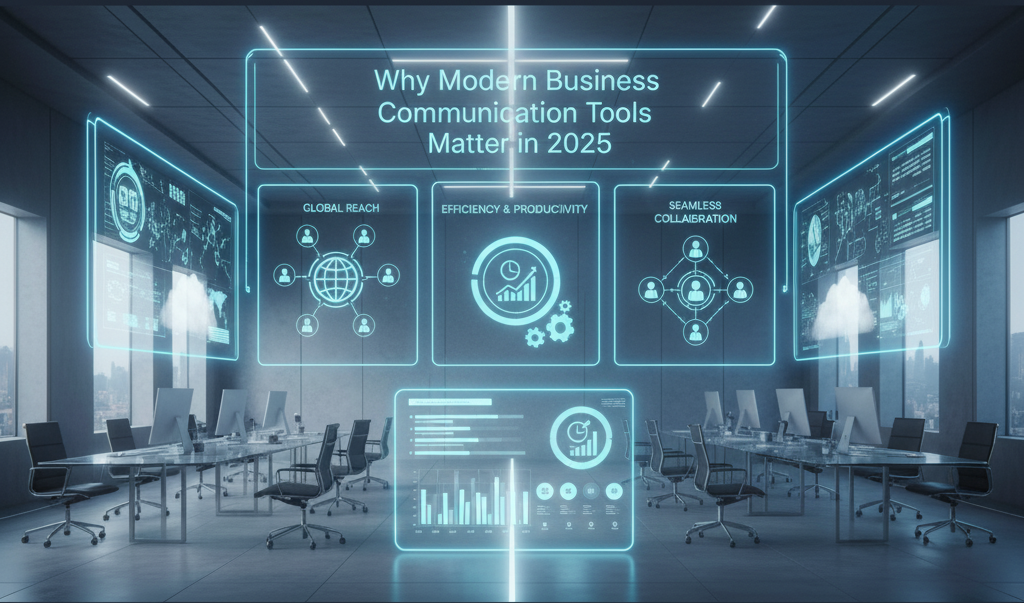
Secondly, these tools significantly improve customer experience. Whether a customer wants to call your company, they can easily do so. They can also message on WhatsApp. Furthermore, they can receive real-time SMS updates. Communication tools ensure you’re available everywhere. In 2025, the brands that win are the brands that communicate clearly, instantly, and consistently.
Another reason these tools are essential is the rise of remote and hybrid work. Teams are no longer sitting in the same office every day. They’re spread across cities, states, and sometimes even countries. With tools like SIP trunking and cloud-based IPPBX, employees can answer business calls from anywhere without exposing personal numbers. This is crucial for maintaining professionalism and workflow continuity.
Lastly, communication tools directly impact revenue. Studies show companies that respond quickly convert more leads, retain more customers, and close deals faster. When communication flows smoothly, business grows naturally. That’s why 2025 is the year every company—small or large—must invest in the right tools for smarter operations.
How Telecom Solutions Are Evolving for Digital-First Businesses
Telecom solutions have undergone a massive transformation over the last decade. However, the real revolution is happening right now in 2025. This is especially true as businesses shift into fully digital-first operations. Traditional telephony was once the backbone of corporate communication. It has now taken a backseat to cloud-based, AI-powered, and omni-channel systems. These systems offer far more flexibility and intelligence. Companies are no longer satisfied with just making and receiving calls. They seek end-to-end communication ecosystems. These ecosystems connect voice, messaging, automation, CRM, analytics, and customer experience into one streamlined workflow.
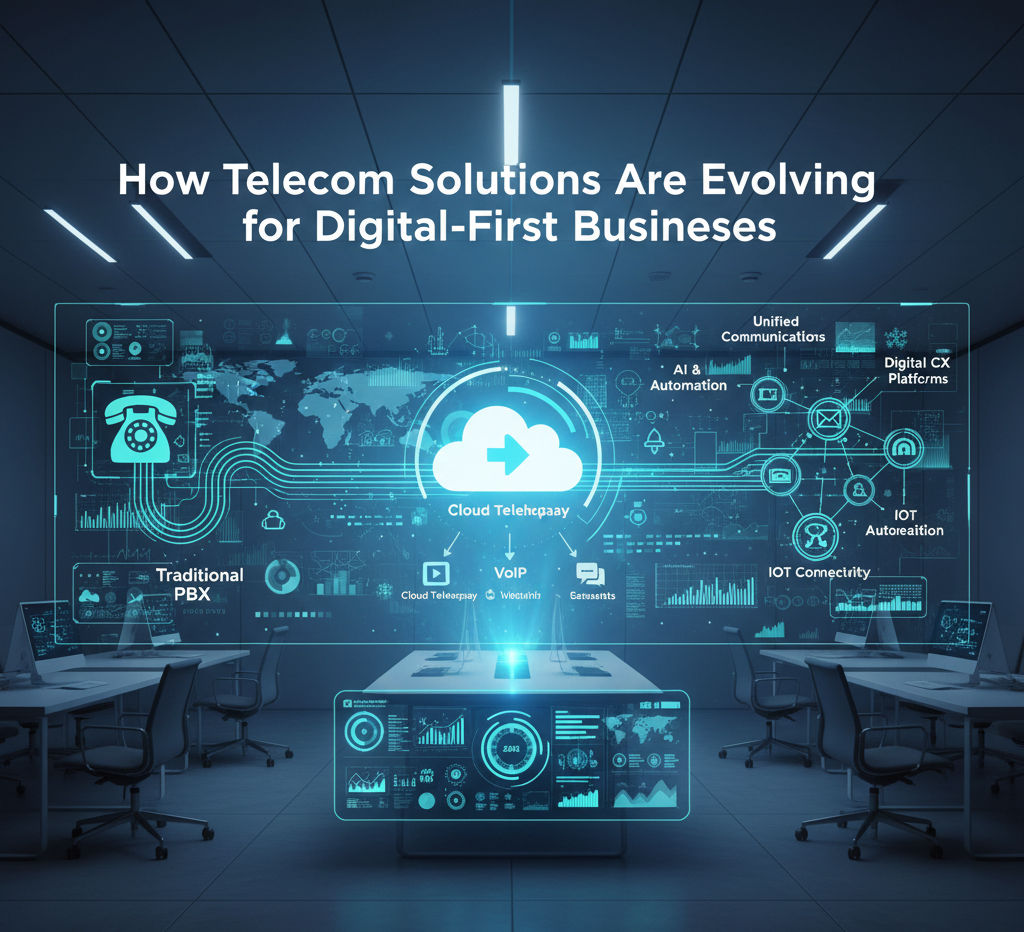
One of the biggest changes shaping telecom today is the shift from hardware-based systems to cloud and VoIP-driven platforms. These modern systems eliminate the cost and limitations of physical infrastructure, allowing businesses to scale instantly. A company can expand its team from 20 to 200. Cloud telecom tools like IPPBX and SIP Trunking will adjust effortlessly. They also adjust effortlessly when new branches open across different cities. This adaptability makes them ideal for remote and hybrid teams—something that has become the new normal across industries.
Artificial Intelligence and automation have also become core elements of modern telecom solutions. In 2025, businesses use AI not just for basic call routing. They leverage advanced features like voice analytics and sentiment detection. AI also supports automated WhatsApp replies, smart IVRs, and lead qualification. Instead of waiting for an agent, customers can receive accurate, fast responses in real time. This reduces call load, improves customer satisfaction, and ensures 24/7 availability without increasing manpower.
Security is another area where telecom has drastically evolved. With cyber threats growing, companies need tools that offer end-to-end encryption. They also require secure APIs and fraud detection. Additionally, compliance with global data protection standards is essential. Telecom providers now integrate advanced security layers to protect customer data and ensure safe communication across all channels.
Lastly, telecom solutions are increasingly focusing on integrations. Businesses want everything connected. They are integrating IPPBX with CRM. They connect the WhatsApp API with ticketing systems. Bulk SMS is integrated with e-commerce platforms. SIP trunks are linked with internal communication tools. This unified communication strategy creates a seamless flow of data, reduces manual work, and enhances decision-making through real-time insights.
Simply put, telecom solutions in 2025 are smarter, faster, and more secure. They are completely aligned with the needs of digital-first companies. These companies rely on speed and automation to stay competitive.
IPPBX: The Heart of Modern Business Communication
IPPBX (Internet Protocol Private Branch Exchange) has become the central nervous system of business communication in 2025. Unlike traditional PBX systems, which depended on physical hardware and costly wiring, IPPBX operates entirely through the internet. This makes it faster, more flexible, and significantly more cost-effective. For modern companies where speed, scalability, and automation matter, IPPBX is no longer a luxury—it’s a necessity.
One of the strongest advantages of IPPBX is how seamlessly it connects teams, customers, and business processes. Companies can maintain a professional communication structure with features like call routing, IVRs, and call recording. Voicemail-to-email, call analytics, and mobile extensions also contribute to this professionalism. They do so without complicated engineering or expensive maintenance. Employees can handle calls from laptops, desktops, or smartphones, giving businesses the freedom to operate from anywhere. This alone has transformed remote and hybrid work models.
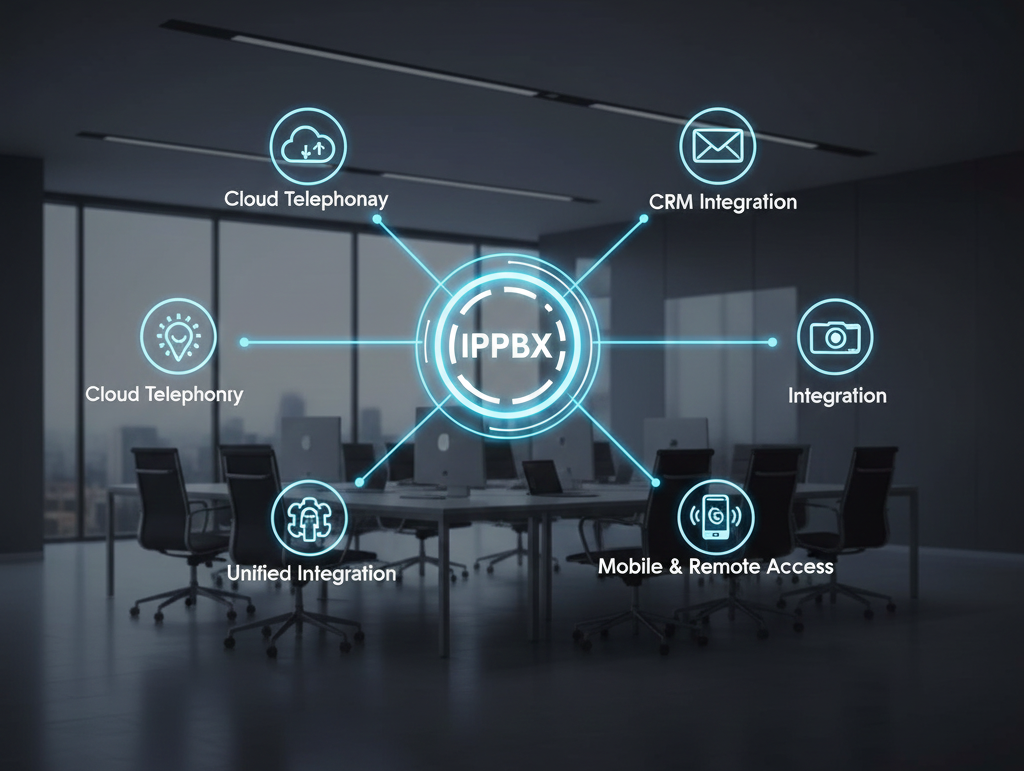
Another major benefit is cost savings. With IPPBX, there is no longer a need for bulky hardware, ongoing repairs, or paying high fees for long-distance calls. Calls made over the internet drastically reduce expenses, allowing businesses to scale communication without worrying about ballooning telecom bills. For small and medium-sized businesses, this shift is a game changer.
IPPBX also boosts customer experience. Customers rarely appreciate waiting endlessly or being transferred from one agent to another. With smart call routing and AI-enhanced IVRs, businesses can direct callers to the right department instantly. Features like call whispering, barging, and analytics help managers monitor quality and improve service efficiency.
Integration is another powerful feature. IPPBX can easily integrate with CRMs, WhatsApp API, ticketing tools, and automation systems. This means every call, lead, or customer interaction gets logged automatically—no more manual data entry or incomplete records. Sales teams benefit from instant caller insights. Support teams get faster access to customer history. Management gains a clearer picture of performance through real-time dashboards.
For fast-growing businesses in 2025, IPPBX is not just a tool. It’s the heart of a high-functioning communication ecosystem. This system drives productivity, improves customer satisfaction, and supports effortless scalability.
Why IPPBX Beats Traditional PBX Systems in 2025
Traditional PBX systems once played a crucial role in business communication. However, in 2025, they cannot keep up with the speed and flexibility companies require. Businesses also demand more intelligence. IPPBX systems outperform traditional PBX in almost every aspect—from cost and scalability to features and integrations. If a business wants to operate efficiently in a digital-first world, it must avoid relying on old hardware-based PBX. Relying on them is like trying to run modern software on a floppy disk. It’s outdated, restrictive, and far too expensive to maintain.
One of the most significant disadvantages of traditional PBX is its dependency on physical infrastructure. Any change—whether adding new users, relocating an office, or upgrading features—requires hardware adjustments, technician visits, and additional costs. IPPBX eliminates all of that. With cloud-based operation, businesses can add new users instantly. They can switch departments on the go. They can also manage the entire communication system through a dashboard. This flexibility is essential in 2025 when companies grow, restructure, and expand rapidly.
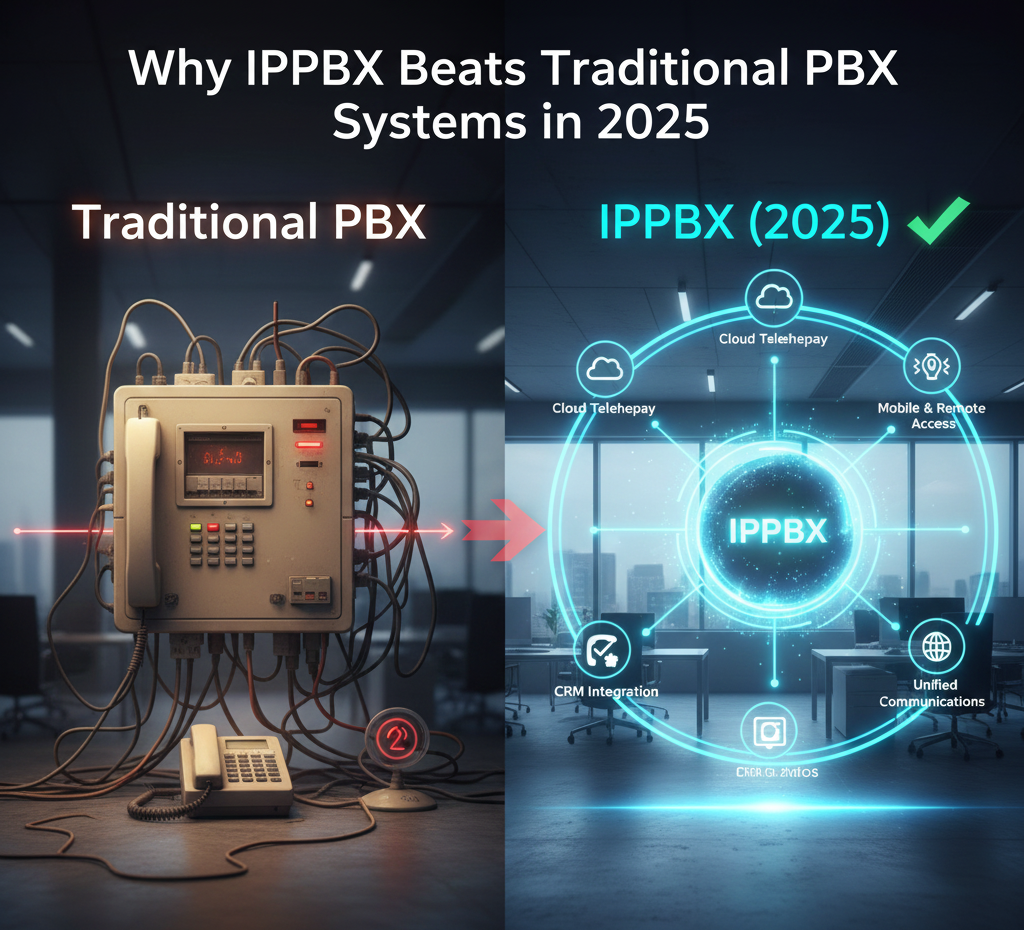
Cost efficiency is another major factor. Traditional PBX systems come with installation fees, repair charges, hardware upgrades, and expensive long-distance call rates. IPPBX, on the other hand, uses VoIP technology, allowing businesses to make unlimited calls at a fraction of the price. For startups and SMEs trying to control expenses, the difference is substantial and impactful.
IPPBX also outshines traditional PBX in terms of advanced features. Features like multi-level IVR, call recording, voicemail-to-email, call analytics, auto-attendants, CRM integrations, and mobile extensions are standard with cloud-based IPPBX. Traditional systems simply cannot match this level of automation or intelligence without heavy investment in hardware.
Security is another critical advantage. Modern IPPBX platforms come with built-in encryption. They feature AI-powered fraud detection, secure routing, and advanced monitoring. These elements are all designed to protect business communication from cyber threats. Traditional PBX systems lack these features and remain vulnerable due to outdated technology.
Most importantly, IPPBX aligns with the modern need for remote and hybrid work. Employees can use softphones and mobile apps to answer business calls from anywhere. This capability is essential for maintaining professionalism while giving teams the freedom to work productively from different locations.
In 2025, IPPBX is not just an upgrade—it is an essential evolution. It empowers businesses with smarter communication, lower costs, and greater flexibility, making it the clear choice over traditional PBX systems.
WhatsApp API: The Ultimate Customer Engagement Tool
In 2025, WhatsApp API has become one of the most powerful tools for business communication and customer engagement. With over 2.7 billion active users worldwide, WhatsApp is the preferred platform for customer interaction. Customers choose instant messaging—not email or phone calls. This shift in communication behavior has pushed businesses to adopt the WhatsApp API. It allows them to deliver faster responses and automate conversations. They can also create highly personalized customer journeys.
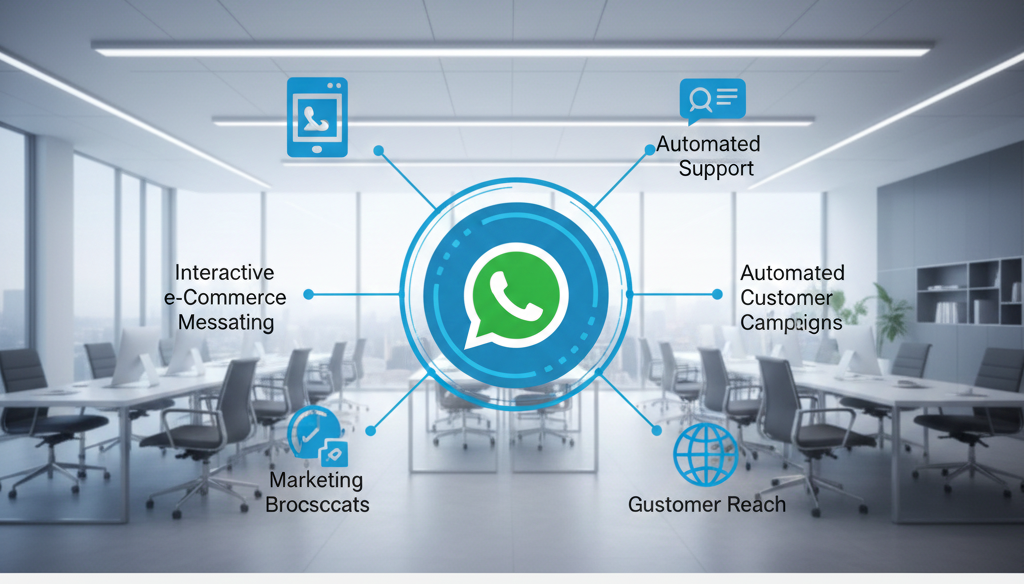
What makes WhatsApp API so valuable is its ability to offer real-time, two-way communication between brands and customers. The regular WhatsApp app is meant for individuals. In contrast, the API version is built for businesses looking to scale communication. It allows companies to send automated replies. They can also broadcast messages, share order updates, and verify OTPs. Additionally, companies can support customers and handle thousands of interactions simultaneously through smart workflows.
One of the most loved features of WhatsApp API is automation. With chatbots, businesses can provide 24/7 customer support. They can instantly respond to FAQs and route queries to the right department. Chatbots can even qualify leads before a human agent steps in. This saves hours of manual effort. It dramatically improves response time. This leads to better customer satisfaction and higher conversion rates.
WhatsApp API is extremely effective for lead nurturing and sales. Imagine sending personalized reminders or product updates directly to your customer’s WhatsApp inbox. You could also share price quotes, demo links, payment confirmations, or abandoned cart notifications. It feels personal, direct, and trustworthy—something email marketing often struggles to achieve.
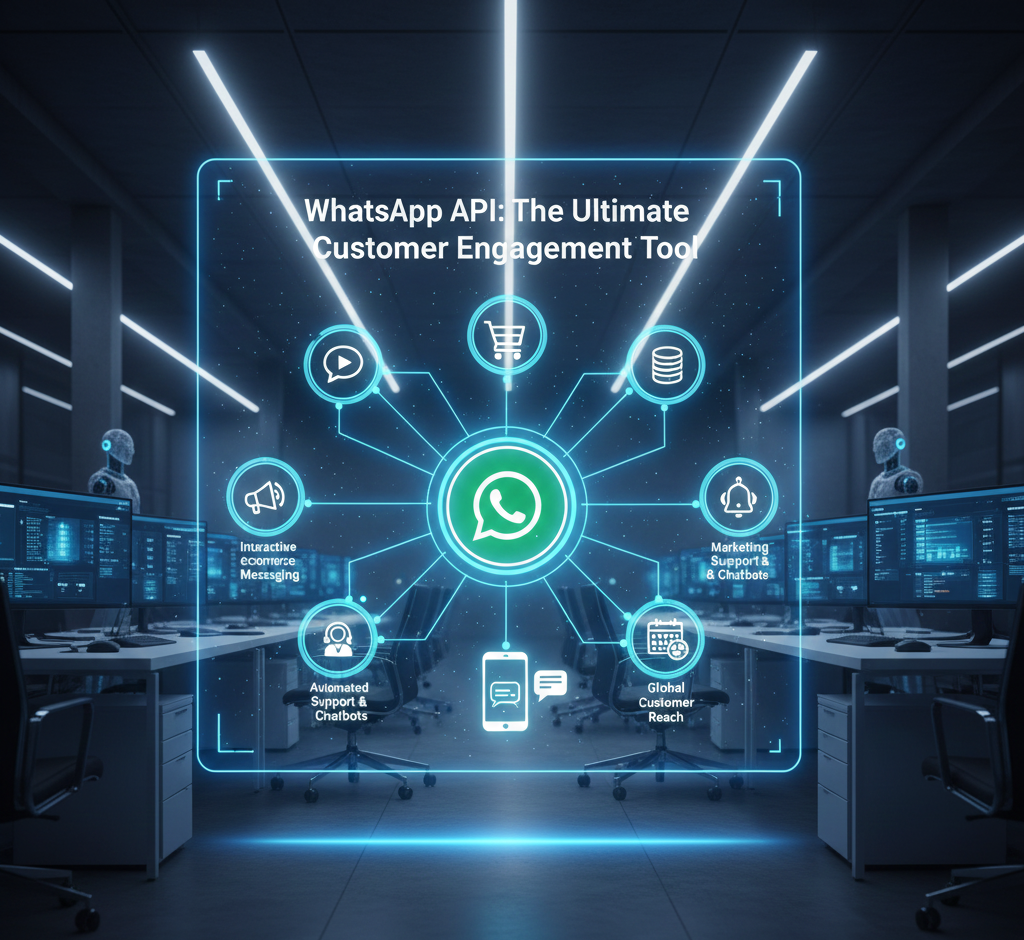
Another strong advantage is multi-agent support, allowing entire sales or support teams to manage WhatsApp conversations through a shared inbox. Managers can track performance, monitor chat quality, assign conversation ownership, and access analytics for better decision-making.
Security and compliance also make WhatsApp API a top choice for businesses handling sensitive information. It offers end-to-end encryption, verified business profiles, and strict data protection standards. This creates a sense of trust and reliability among customers interacting with your brand.
WhatsApp API is the ultimate engagement tool. It connects businesses with customers in the most natural and convenient way possible. This happens through instant messaging that feels human, fast, and personal.
How WhatsApp API Improves Lead Conversion and Support
WhatsApp API isn’t just a communication tool. It’s a complete conversion engine. It helps businesses turn more leads into paying customers while delivering exceptional customer support. In 2025, attention spans are shorter than ever. Customers expect instant interaction. WhatsApp API bridges the gap between inquiry and action. It gives businesses the power to engage prospects instantly and keep them warm throughout the entire sales journey.
One of the biggest challenges companies face today is the delay in responding to leads. Leads are significantly more likely to convert when contacted within five minutes. In comparison, those who wait hours—or worse, days—are less likely to convert. WhatsApp API offers automated responses. Intelligent chatbots initiate conversations the moment a lead interacts with your business. Whether it’s a website form submission, an ad click, or a product inquiry, WhatsApp delivers immediate engagement. This boosts your chances of conversion.
WhatsApp API also supports personalization at scale, which is essential for nurturing leads. You can send custom messages, product recommendations, pricing details, and follow-up reminders—all tailored to a customer’s interest or previous interactions. This level of personalization makes customers feel valued and understood, leading to more trust and higher sales.
For support, WhatsApp API provides an efficient and friendly way for customers to communicate. Customers no longer need to wait on long calls. They also don’t have to navigate slow email threads. Instead, they can simply send a WhatsApp message and receive quick solutions. Businesses can set up automated support journeys, route messages to the right team, and maintain conversation history for context. The result? Faster resolutions, happier customers, and significantly lower support costs.
Another major advantage is the multi-agent shared inbox, which ensures no message goes unanswered. Agents can collaborate, tag conversations, monitor chat progress, and escalate cases if needed. Managers also benefit from analytics like response time, agent performance, chat volume, and customer satisfaction metrics.
WhatsApp API also plays a pivotal role in post-sales support and retention. It sends order tracking updates, payment reminders, subscription alerts, and service notifications. This keeps customers informed and prevents confusion. The more seamless the experience, the more likely they are to return.
All these features make WhatsApp API a powerful driver of lead conversion. It is also a strong tool for customer support. This helps businesses stay ahead in a fast-paced digital marketplace.
SIP Trunking: The Backbone of Cloud Communication
SIP Trunking has become one of the most essential communication technologies for modern businesses in 2025. Companies are shifting to cloud-based systems. Remote work is becoming the standard rather than the exception. SIP trunks act as the invisible infrastructure that keeps everything running smoothly. They enable businesses to make and receive calls over the internet. This offers far more flexibility. It also dramatically reduces operational costs.
One of the strongest advantages of SIP trunking is its scalability. Traditional telecom setups require physical installation and recurring hardware costs to add phone lines. In contrast, SIP trunks let you scale communication instantly. Whether your company needs to add 5, 50, or 500 new extensions, you can do it through a simple dashboard. There is no downtime. This makes SIP trunking ideal for growing businesses and seasonal industries where call volume fluctuates throughout the year.
Cost savings are another major reason SIP trunking is now considered the communication backbone. Businesses no longer need to pay for separate voice lines or expensive international call rates. SIP trunking routes calls through the internet, making both local and global communication significantly cheaper. Many companies report savings of up to 50–70% after switching from legacy telecom systems.
Quality and reliability have also improved tremendously. Modern SIP trunk providers offer high-definition voice quality, smart routing, automatic failover, and geo-redundancy. This ensures uninterrupted communication even during network issues or system outages. In 2025, where uptime is directly connected to customer experience, companies rely heavily on SIP trunks to maintain uninterrupted operations.
SIP trunking is also crucial for remote and hybrid teams. Employees can answer calls from anywhere in the world using softphones, mobile apps, or cloud-based communication platforms. This keeps teams connected without depending on office-bound hardware. It also helps maintain professionalism, as employees can use company numbers instead of personal phones.
Security is another area where SIP trunking shines. Modern solutions include encryption, fraud prevention, call authentication, and monitoring tools that protect communication from cyber threats. As cyber-attacks become more sophisticated, these protections are essential for safeguarding sensitive business data.
SIP trunking integrates with IPPBX, CRM systems, and call center software. This integration creates a unified communication ecosystem. It connects every department and every customer touchpoint. This seamless integration is what makes SIP trunking the true backbone of business communication in 2025.
Why SIP Trunks Are Essential for Remote and Hybrid Teams
In 2025, remote and hybrid work environments are not merely trends—they are long-term operational realities for businesses worldwide. Teams are distributed across cities, countries, and even continents. The one element that keeps them connected in real time is seamless communication. This is where SIP trunks become absolutely essential. They provide the infrastructure for cloud telephony. They enable remote calling and unified communication without relying on outdated physical phone lines.
One of the biggest challenges remote teams face is maintaining a professional and consistent communication experience. Using personal phone numbers or consumer apps can lead to untracked conversations, privacy issues, and scattered communication trails. SIP trunks solve this by enabling employees to make and receive business calls from anywhere. They use company-assigned numbers whether they’re on a laptop, desktop, or mobile app. This ensures professionalism and consistency regardless of where team members are located.
Another advantage is reliability. Communication downtime can cripple remote teams, causing delays, missed opportunities, and frustrated customers. SIP trunks provide automatic failover, redundancy, and smart routing features that ensure continuous connectivity. Even if one network fails, calls get instantly routed through alternative channels. This level of resilience is critical for businesses that operate across multiple time zones or rely heavily on customer interaction.
SIP trunks also support scalable communication, allowing companies to add or remove calling capacity instantly. SIP trunking offers flexibility for businesses onboarding new remote employees. It is also beneficial for those expanding service hours or handling seasonal call spikes. Businesses can adjust without hardware changes or long waiting times. This adaptability helps remote teams stay efficient and responsive throughout the year.
One of the most powerful features of SIP trunks is their compatibility with modern collaboration tools and CRMs. Sales, support, and service teams benefit immensely from having call logs, customer details, and communication histories synced automatically. This is especially important for remote workers who rely on centralized digital systems to stay updated and deliver consistent experiences.
Security is another major concern for distributed teams. SIP trunks address this with encryption protocols. They also use authentication layers and real-time threat monitoring. This ensures company data and customer conversations remain fully protected, even when accessed from different locations and devices.
SIP trunks empower remote and hybrid teams with the freedom to work from anywhere. They maintain the same quality, structure, and security as an office-based environment. For this reason, SIP trunking has become a foundational component of modern business communication in 2025.
Bulk SMS: Still the Fastest Way to Reach Customers in 2025
Even with the rise of advanced communication channels like WhatsApp API and AI-driven chatbots, Bulk SMS remains one of the fastest ways to reach customers in 2025. It is one of the quickest methods available. It is also among the most reliable. It’s extremely direct. Additionally, it is a cost-effective method. It’s simple, instant, extremely direct, and highly effective for both marketing and transactional communication. Other channels may require internet access. They might need app installations or account verification. SMS, however, cuts through all barriers. It lands directly in the customer’s inbox—within seconds.
One of the biggest strengths of Bulk SMS is its unmatched open rate. SMS messages have an open rate of around 98%, and most are read within 3–5 minutes. No other communication tool comes close. This makes SMS perfect for time-sensitive messages like OTPs, alerts, reminders, emergency notifications, payment confirmations, and promotional campaigns. When speed matters, SMS always wins.
Bulk SMS is incredibly valuable for businesses because of its simplicity and universality. Every mobile device—whether it’s a basic phone or a high-end smartphone—supports SMS. There is no dependency on internet connectivity. This makes it the ideal channel for reaching customers in remote areas. It is also effective during network outages or when other systems may fail.
From a marketing perspective, Bulk SMS is a powerful driver of conversions. Promotional SMS campaigns for offers, discounts, seasonal sales, product launches, and event reminders consistently yield some of the highest engagement rates. Customers appreciate short, clear, and relevant messages, and SMS delivers exactly that. When combined with smart segmentation and personalization, SMS campaigns can drive massive traffic and significantly boost ROI.
Bulk SMS also plays an important role in automation and customer workflow management. Businesses can set up automated SMS flows that send reminders before appointments, notify customers about shipment updates, confirm bookings, or alert them about low balances or expiring services. These small but meaningful messages enhance customer satisfaction and reduce support workload.
Security is another big advantage. Since SMS is widely used for OTP verification and two-factor authentication, businesses rely on it to protect accounts and authorize transactions. Even in 2025, SMS remains one of the most trusted verification channels globally.
Integration is what makes Bulk SMS even more powerful. It connects seamlessly with CRMs, e-commerce systems, banking software, healthcare platforms, and marketing tools. Whether you need to send 1 message or 1 million, Bulk SMS can scale instantly without delays.
In a world full of communication apps, Bulk SMS continues to stand strong as the reliable, instant, and universal communication channel that businesses can always count on.
Toll-Free Numbers: Enhancing Brand Credibility and Trust
Toll-free numbers have long been a symbol of professionalism, and in 2025, their value has only increased. In a market where customers have countless choices, businesses need every possible advantage to stand out—and a toll-free number instantly communicates credibility, reliability, and customer-centric service. Whether you’re a startup, a large enterprise, or a service-based company, having a toll-free number tells customers that you’re accessible, trustworthy, and ready to assist without any cost to them.
One of the biggest reasons toll-free numbers remain powerful is the sense of security and legitimacy they provide. Customers are much more likely to call a business that uses a toll-free number than one that displays a regular or unknown number. It creates the impression of an established and well-organized company. In industries like finance, healthcare, insurance, and e-commerce—where trust is everything—a toll-free number can make a noticeable difference in customer behavior and brand perception.
Toll-free numbers are also incredibly useful for customer support and sales. When people know they can call your business without being charged, they are more likely to reach out with inquiries, complaints, feedback, or purchase-related questions. This increases engagement, reduces communication hesitation, and opens more opportunities for upselling and cross-selling. Companies that prioritize customer convenience always gain a competitive edge, and toll-free numbers are a simple yet powerful way to achieve that.
In 2025, toll-free numbers have evolved beyond just voice calls. They now integrate smoothly with IPPBX, call center software, CRMs, and automation tools. This allows businesses to track call analytics, monitor agent performance, record calls, and route incoming calls intelligently to the right department. Managers can see which campaigns or regions generate the most calls and adjust strategies accordingly.
For marketing campaigns, toll-free numbers are extremely effective. When displayed on billboards, ads, websites, SMS campaigns, or packaging, they encourage more customer interactions. Many businesses also use vanity toll-free numbers—for example, 1800-FLOWERS or 1800-RENT-CAR—to make their brand more memorable and easier to contact.
Toll-free numbers also support remote and hybrid teams. Thanks to cloud telecom solutions, employees can answer toll-free calls from anywhere while still maintaining a professional presence. This ensures consistent communication even during peak hours or emergencies.
In short, toll-free numbers play a vital role in enhancing brand credibility, improving customer accessibility, and supporting seamless communication for businesses in 2025. They remain one of the most effective tools for building trust and encouraging customer engagement.
How CRM Integration Changes the Entire Communication Workflow
CRM integration has become the central pillar of business communication in 2025. While tools like IPPBX, WhatsApp API, SIP Trunk, Bulk SMS, and Toll-Free Numbers are powerful on their own, their true potential is unlocked only when they are fully integrated into a company’s CRM system. CRM integration connects every communication channel into one unified ecosystem, allowing businesses to manage customers, track conversations, store history, and automate workflows with remarkable precision.
One of the biggest advantages of CRM integration is centralized customer data. Every call, message, SMS, or WhatsApp conversation gets automatically logged inside the CRM. This eliminates the need for manual data entry and ensures that sales and support teams always have access to complete customer history. Whether an agent is handling a lead or resolving an issue, they can see everything in one place—past conversations, notes, previous orders, preferences, and more.
CRM integration also improves lead management and conversion. When a customer calls through a toll-free number, submits a form, or messages on WhatsApp, the CRM instantly creates or updates the lead profile. Coupled with automation, this allows businesses to assign leads to agents, trigger WhatsApp workflows, send follow-up SMS, or schedule callbacks—all without manual intervention. This level of automation dramatically increases response speed, which is crucial for converting high-intent leads.
Another powerful benefit is workflow automation. Integrating CRM with IPPBX allows automatic calling tasks, predictive dialing, click-to-call features, and smart routing based on the CRM’s data. For WhatsApp and SMS campaigns, businesses can send personalized messages in bulk from within the CRM, track delivery reports, and monitor engagement analytics. This not only simplifies workflows but amplifies the impact of every communication effort.
For support teams, CRM integration ensures streamlined ticketing and faster resolutions. Incoming calls or chats can automatically generate support tickets. Agents can view previous issues, customer background, and ongoing cases, allowing them to deliver more informed and efficient service. This reduces repetition, frustration, and miscommunication for customers.
Managers benefit significantly from CRM-integrated communication because it provides real-time insights into call volume, conversation quality, response times, customer sentiment, agent performance, and campaign results. These insights help businesses make smarter decisions, optimize strategies, and address bottlenecks before they affect customer satisfaction.
In 2025, CRM integration isn’t just an upgrade—it is the ultimate backbone of a unified communication strategy, connecting every tool and channel into a powerful, data-driven engine that boosts productivity, improves experience, and fuels growth.
Choosing the Right Unified Communication Strategy for 2025
Choosing the right unified communication strategy in 2025 is no longer about picking a few random tools—it’s about building a complete, interconnected ecosystem that supports your business goals, customer expectations, and internal workflows. With so many communication channels available today, businesses need a clear roadmap to determine which tools deliver the greatest impact. A unified strategy ensures consistency, efficiency, and better decision-making across all departments.
The first step in creating an effective communication strategy is understanding your customer journey. Analyze how customers interact with your business—Do they call often? Do they prefer WhatsApp? Do they respond better to SMS reminders or email campaigns? This information helps you determine which tools should take priority. For instance, service-based businesses may benefit more from IPPBX and WhatsApp API, while e-commerce brands lean heavily on Bulk SMS and automated chat flows.
The second step is evaluating internal communication needs. Remote and hybrid teams require SIP trunking and cloud-based IPPBX for seamless calling. Sales teams need real-time CRM integration for instant access to customer data. Support teams rely on ticketing workflows, IVR routing, and WhatsApp automation. Understanding the needs of each department helps businesses choose tools that boost team productivity instead of complicating daily tasks.
The next crucial element is integration. A communication strategy is only effective when systems talk to each other. Tools like IPPBX, WhatsApp API, Bulk SMS, and SIP Trunks should integrate smoothly with your CRM, marketing automation platforms, ERP systems, or e-commerce engines. Without integration, businesses face data silos, manual work, and inconsistent customer experiences. Choosing tools that offer robust API support and native integrations ensures long-term scalability.
Business leaders must also consider scalability and cost-efficiency. The best communication strategy grows with the company. Cloud-based solutions allow businesses to add more agents, phone lines, messaging capacity, or support channels without heavy investment. SIP trunking, for example, scales instantly during peak seasons, while WhatsApp API supports thousands of conversations without affecting performance.
Security and compliance are equally important. In 2025, customers expect brands to protect their personal information at every touchpoint. Select providers that offer encryption, fraud protection, and compliance with global regulations such as GDPR, TRAI, HIPAA, and DPA standards.
Finally, businesses must create standard operating procedures (SOPs) for agents, define response-time expectations, and train teams to deliver consistent communication. Tools are powerful—but the strategy behind them determines success.
Building the right unified communication strategy today ensures that your business remains competitive, responsive, and customer-focused in a fast-evolving digital world.
Best Practices for Implementing Business Communication Tools
Implementing business communication tools in 2025 requires more than simply purchasing software or subscribing to a cloud service. To get the full benefits—higher productivity, better customer engagement, reduced costs, and streamlined workflows—companies need a thoughtful, structured implementation approach. When executed correctly, these tools become the backbone of your operations, connecting departments, improving customer experience, and boosting overall efficiency.
The first and most important step is conducting a communication audit. Before integrating IPPBX, WhatsApp API, SIP Trunks, Bulk SMS, or Toll-Free Numbers, businesses must identifying communication gaps, bottlenecks, and inefficiencies. This involves understanding how many customer interactions your team handles daily, what channels customers prefer, where delays happen, and which processes require automation. A clear audit prevents unnecessary spending and ensures the tools selected align with your real needs.
Next, businesses should focus on seamless integration. Modern communication systems are most powerful when they work together instead of existing as isolated tools. Integrating IPPBX with your CRM allows sales teams to log calls automatically. Integrating WhatsApp API with support systems accelerates ticket resolutions. Connecting Bulk SMS to your marketing engine strengthens customer engagement. These integrations create a unified communication experience—essential for efficient workflows.
Training is another essential best practice. Even the most advanced communication tools are ineffective if your staff doesn’t know how to use them. Employees must be trained on features like call routing, WhatsApp templates, SMS automation, CRM logging, and customer handling best practices. Training ensures higher adoption rates, better performance, and fewer errors.
Another key element is automation setup. Businesses should automate repetitive tasks such as sending reminders, ticket updates, OTPs, follow-ups, or lead qualification messages through WhatsApp and SMS. Automation not only saves time but also delivers consistent communication—without the need for manual intervention.
Monitoring and analytics must be part of the implementation strategy. Use dashboards and reports to track call volumes, message delivery rates, agent performance, customer satisfaction, and conversion metrics. These insights help businesses optimize their processes, spot trends early, and address issues before they impact customer experience.
Security should never be ignored. Ensure your tools comply with industry standards, offer encryption, protect data privacy, and prevent misuse. With rising cyber threats in 2025, secure communication is a non-negotiable requirement.
Lastly, businesses should regularly review performance and upgrade their communication stack. Technology evolves quickly, and staying updated ensures your communication system remains modern, efficient, and competitive.
Following these best practices creates a strong foundation for implementing communication tools that support business growth for years to come.
Future Trends: What Business Communication Will Look Like by 2030
As we move toward 2030, business communication is set to evolve faster than ever before. In 2025, there was massive adoption of cloud telephony, automation, AI chatbots, and omnichannel platforms. The next five years will reshape how companies interact with customers. They will also change interactions with employees and partners. The future will be driven by intelligence, personalization, and frictionless connectivity across every possible channel.
One of the most significant trends shaping 2030 is the rise of AI-powered communication assistants. Unlike today’s chatbots that handle basic queries, future AI systems will carry out full conversations, understand emotions, identify intent, and complete complex tasks like sales qualification, technical troubleshooting, and contextual support. These assistants will operate across IPPBX, WhatsApp, SMS, email, and web chat—forming an always-available virtual workforce.
Another major shift will be the widespread adoption of voice intelligence and analytics. Calls will no longer be just conversations—they will be rich data sources. AI will analyze tone, sentiment, keywords, and behavioral patterns to provide real-time coaching to agents and actionable insights to managers. Businesses will understand customer needs even before a conversation ends, helping personalize interactions at an unprecedented level.
The future also points toward hyper-automation, where communication tools execute tasks automatically based on behavior, triggers, and predictive insights. For example, a CRM system may automatically follow up with leads who show high intent. It can send WhatsApp reminders before deadlines. Additionally, it might trigger bulk SMS alerts during emergencies. Manual tasks will decrease, allowing teams to focus more on strategy and relationship-building.
Global remote work is becoming the default. As a result, communication systems will transition into fully virtual, decentralized call centers. Agents from around the world can communicate using cloud-based tools without geographical limitations. SIP Trunking and advanced IPPBX systems will support seamless voice traffic, while 5G and next-gen networks will ensure crystal-clear connectivity.
Security and privacy will also play a bigger role. Companies will adopt blockchain-based identity verification, end-to-end encrypted communication channels, and biometric authentication to prevent fraud and protect sensitive data. Customers will choose businesses that guarantee secure and trustworthy communication.
Finally, the future will be deeply omnichannel. Customers will switch effortlessly between voice, chat, WhatsApp, social media, and virtual assistants. They will do this without losing context. CRM solutions will unify all touchpoints so agents always have a complete view of customer history.
By 2030, communication won’t just be faster. It will be intelligent, predictive, and deeply personalized. This will enable businesses to deliver seamless and unforgettable customer experiences.
Conclusion
Business communication in 2025 is undergoing a powerful transformation. Companies use tools like IPPBX, WhatsApp API, SIP Trunking, Bulk SMS, and Toll-Free Numbers. These tools deliver seamless, fast, and highly personalized experiences. These experiences match the expectations of modern customers. These tools not only improve communication efficiency but also drive higher conversions, reduce operational costs, and strengthen customer trust.
When combined with strong CRM integration, these communication tools create a unified ecosystem. This ecosystem enhances team productivity. It boosts customer satisfaction and gives businesses a competitive edge in an increasingly digital world. As we move toward 2030, automation, AI-driven interactions, secure communication, and omnichannel engagement will become the new standard.
Businesses that invest in the right communication infrastructure today will lead tomorrow. They will be stronger, smarter, and more connected than ever.
FAQs
1. Why are business communication tools essential in 2025?
They help companies streamline customer interactions, automate workflows, manage remote teams, and deliver faster, more reliable support.
2. What is the role of IPPBX in modern business communication?
IPPBX replaces traditional PBX systems with a cloud-based platform that offers advanced calling features, scalability, and cost efficiency.
3. Why is WhatsApp API becoming popular for businesses?
It enables instant communication, automation, lead nurturing, and personalized engagement at scale.
4. How does SIP Trunking support remote teams?
SIP Trunks allow employees to make and receive business calls from anywhere using internet-based telephony, perfect for hybrid and distributed teams.
5. Are Bulk SMS and Toll-Free Numbers still relevant in 2025?
Absolutely. Bulk SMS remains the fastest way to reach customers, while toll-free numbers enhance brand trust and accessibility.